Women's health
Female hormone blood test in Liverpool
A simple starting point for your hormone picture.
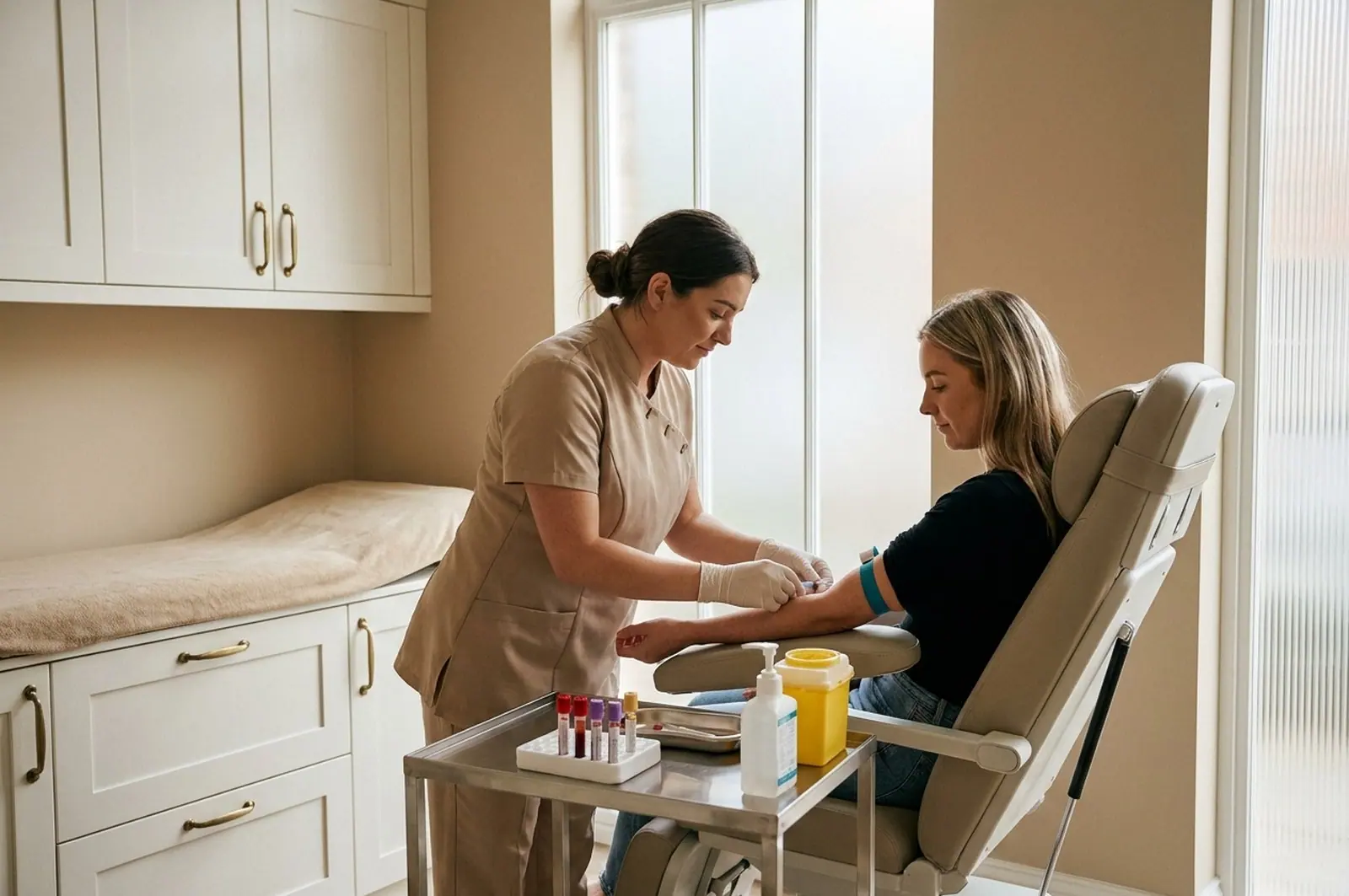
The Female Basic Hormone Screen is a female hormone blood test for anyone with irregular periods, cycle changes or hormone-related symptoms who wants a focused first look. One venous sample, taken by a clinician at 57 Rodney Street in Liverpool, is tested for five markers: oestradiol, FSH, LH, prolactin and testosterone. It gives context on how your reproductive hormones sit together. It does not give a diagnosis, and you do not need a GP referral to book.
It is a starting point, not a full work-up. The panel does not include progesterone, AMH, SHBG or thyroid markers. If your questions are mainly about fertility, the Essential Women's Fertility Test adds progesterone, AMH, SHBG and thyroid markers. If acne, extra hair growth or irregular cycles have you wondering about polycystic ovary syndrome, the PCOS / Androgen Symptoms Screen adds thyroid markers, HbA1c, cholesterol, SHBG and the free androgen index. Your clinician can help you choose if you are unsure which fits.
What's tested
5 biomarkers from a single venous sample.
| Marker | What it tells you |
|---|---|
| Oestradiol | The main form of oestrogen. It follows your cycle and changes through the menopause. |
| Follicle Stimulating Hormone (FSH) | A pituitary hormone that drives egg development. It rises as the ovaries slow down, including around the menopause. |
| Luteinising Hormone (LH) | A pituitary hormone that triggers ovulation, read alongside FSH and oestradiol. |
| Prolactin | A pituitary hormone that supports milk production. A raised level can affect periods, fertility and libido. |
| Testosterone | The main male sex hormone, also present in smaller amounts in women. It influences energy, mood, libido and muscle. |
Understand what's measured
Plain-English guides to the markers in this panel: what each one checks, and what high and low results can mean.
See all blood test guidesRead more
How this test compares with Thriva, Randox Health and Numan
Who this blood test may suit
Your periods are irregular
The NHS describes periods as irregular when the gap between them is under 21 days or over 35 days. Hormones are only one possible reason, but a snapshot of FSH, LH and oestradiol gives you and your clinician something to read alongside a period diary.
Your cycle has changed and you are not sure why
The NHS lists several common causes of irregular periods, including hormonal contraception, gaining or losing a lot of weight, stress, and exercising a lot. A hormone screen can sit alongside those questions, not replace them.
You have acne, oily skin or extra hair growth
The NHS includes oily skin, acne and excessive hair growth among the main symptoms of polyendocrine metabolic ovarian syndrome (PMOS), which used to be called polycystic ovary syndrome (PCOS). This panel includes testosterone. For a broader look at that picture, the PCOS / Androgen Symptoms Screen is the more complete option.
You are in your 40s and noticing changes
The NHS says menopause usually affects women between 45 and 55 but can happen earlier. If you are under 45 and your periods are changing, FSH and oestradiol can be part of the conversation with your clinician. If you are 45 or over with typical symptoms, see the note on what NICE advises under what results cannot show.
You want a simple snapshot before deciding what to do next
Five markers from one visit is a manageable place to begin. If the results suggest a wider look is sensible, you can add a more specific panel later, without having paid for a large one up front.
What happens at your appointment
- 1
Arrive at 57 Rodney Street for your appointment. No GP referral needed.
- 2
Your clinician confirms the right test for you and answers any questions.
- 3
A quick venous blood draw, taken by a clinician.
- 4
Your results are sent to you securely, with clear guidance on any recommended next steps.
How to prepare for your test
- You do not need a GP referral. You can book this test directly online.
- Whether you need to fast depends on the panel. We confirm exactly what to do when your booking is confirmed, and you can call the clinic if you are unsure.
- Tell us about any hormonal contraception, HRT or other hormone-related medicines you use, and bring a note of when your last period started if you can. Your clinician will want that context.
- Hormone panels can have timing instructions, such as a particular point in your cycle. We confirm exactly what to do when your booking is confirmed, so you do not need to work it out in advance.
What your results can and cannot tell you
What they can show
- Where your FSH, LH and oestradiol sit against the laboratory's reference range, which your clinician reads alongside your cycle and symptoms.
- Whether prolactin, a hormone made by the pituitary gland, is within the reference range.
- Your total testosterone, which women make in smaller amounts than men, as context for symptoms such as acne or extra hair growth.
- A baseline you can repeat later, so that any change is compared like for like.
- Whether a more specific panel, such as the fertility or PCOS panel, is a sensible next step.
What they cannot show
- A diagnosis. The NHS says PMOS is looked into with blood tests for hormone levels and insulin resistance plus an ultrasound scan of the ovaries, so a five-marker hormone screen cannot confirm or rule it out. Your GP is the right person for any diagnosis.
- Anything outside the five markers. Progesterone, AMH, SHBG and thyroid function are not part of this panel.
- Whether you are perimenopausal or menopausal if you are 45 or over. The NHS says there is no routine test for perimenopause and menopause. NICE advises that in healthy people aged 45 or over with symptoms, perimenopause and menopause are identified without laboratory tests, and not to use an oestradiol test for this.
- The effect of hormonal contraception. It can change your periods, and NICE advises against using an FSH test to identify menopause in people using combined hormonal contraception. Tell your clinician what you use.
When you get your results, and what happens next
Most results are back within 1–3 working days depending on the panel. They are checked by a clinician and sent to you securely, with clear guidance on what to do next, including onward referral where appropriate. If you would like to talk them through, you can add a 30-minute clinician review for £30.
Your clinician checks your results and sends them to you securely. If a marker sits outside the reference range, they will say so plainly, explain what it may mean in the context of your cycle and symptoms, and suggest a sensible next step. That could be a repeat test, a more specific panel, or a conversation with your GP, who can arrange further assessment if needed.
The NHS suggests speaking to a GP if your periods are irregular, last longer than 7 days, or come with other symptoms such as weight gain, tiredness or hair growth on the face. It also lists bleeding between periods, and irregular periods alongside difficulty getting pregnant. Those are reasons to see your GP whatever your blood results show. You can add a 30-minute clinician review of your results for £30 if you would like to talk them through.
Price and booking
The Female Basic Hormone Screen is £60, paid securely online when you book. Appointments are at 57 Rodney Street, Liverpool, Monday to Friday. You can book online, see all test prices, or read how a visit works.
Frequently asked questions
This page is for general information. Blood tests are carried out following a short clinical check to confirm the panel is appropriate for you. Your results are sent to you securely, with clear guidance on any recommended next steps.